


What is Moringa. The superfood plant of the moment?
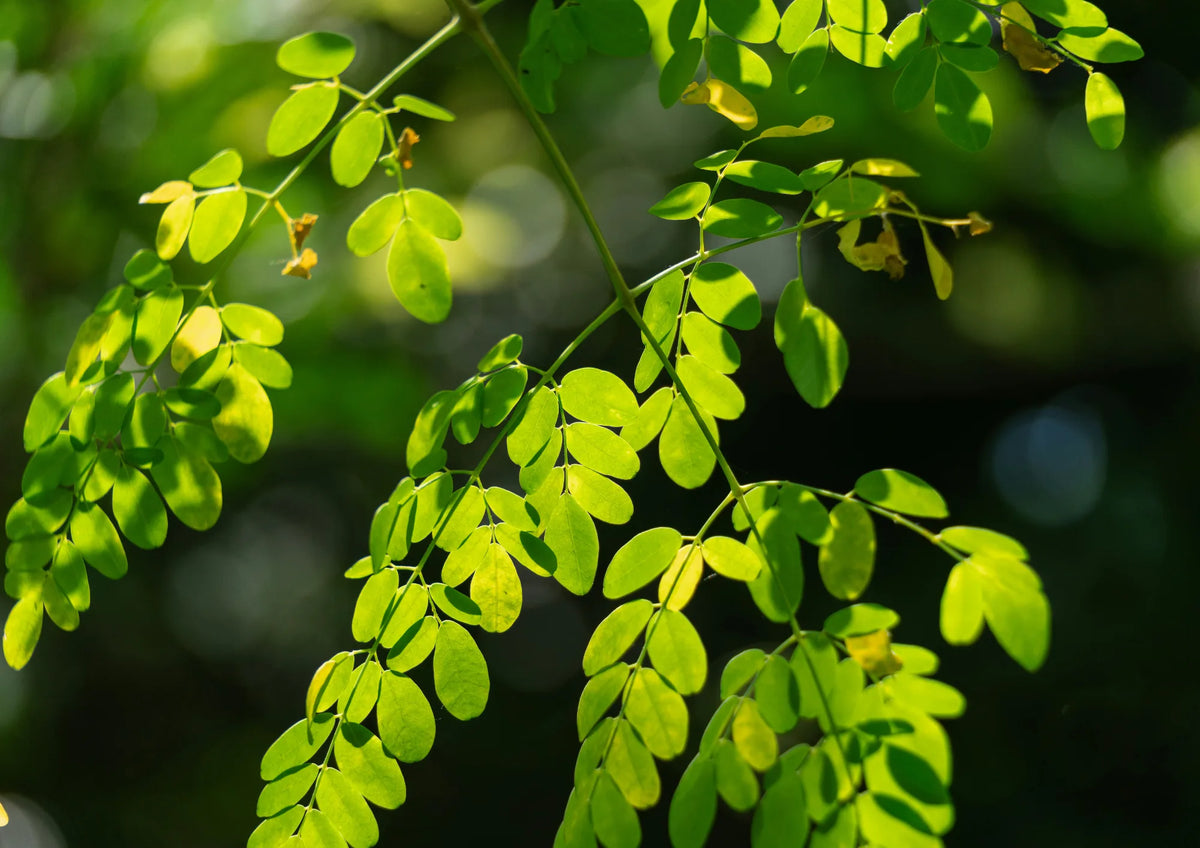
Also known as the “tree of life”, Moringa Oleifera is a plant with remarkable nutritional properties, used for centuries as a food in many cultures around the world. In recent years this species has also attracted growing interest in the West, where it has been recognised as one of the most promising superfoods of the moment.
But what is moringa and what are the reasons for its success?
Here is a complete overview of what makes this plant so unique: from its beneficial properties to its main uses, and the ways in which it can be consumed. An in-depth guide for anyone who wants to better understand the value of this plant and its potential contribution to everyday wellbeing.
What is Moringa and where is it found
Moringa Oleifera is a tropical plant belonging to the Moringaceae family, known above all for its extraordinary nutritional and beneficial properties. It is an evergreen tree that can reach 7-10 metres in height, characterised by nutrient-rich leaves, white flowers and long pods containing edible seeds.
Native to the tropical regions of India and Africa, the moringa tree has spread all over the world thanks to its extraordinary ability to adapt to hot, dry climates. Its drought resistance makes it ideal for cultivation in tropical and subtropical areas, where it thrives without requiring large amounts of water.
Today, moringa is also grown in humanitarian projects, for its nutritional contribution in food programmes. Its leaves are in fact a natural source of vitamins, minerals and protein and have been successfully integrated into diets in developing countries, offering essential nutritional support to the most vulnerable communities.
What does Moringa contain?
This plant is recognised as one of the most nutritious in the world. Its leaves, available both fresh and dried, are a true concentrate of nutrients, as they contain:
- vitamin A, which contributes to the maintenance of normal vision and to the normal function of the immune system;
- vitamin C, which contributes to the normal function of the immune system;
- a broad spectrum of B vitamins, which contribute to normal energy-yielding metabolism.
In terms of minerals, moringa stands out for:
- calcium, needed for the maintenance of normal bones and teeth;
- iron, which contributes to normal formation of red blood cells;
- magnesium, which contributes to normal muscle function;
- potassium, which contributes to the maintenance of normal blood pressure and to normal muscle function.
On top of this there is a rich supply of protein, including all 9 essential amino acids, making it an ideal nutritional complement, particularly for those following a vegetarian or vegan diet.
Besides these remarkable properties, moringa is rich in fibre, which supports intestinal regularity, and in powerful antioxidants such as polyphenols, quercetin and chlorogenic acid, studied by research for their role in counteracting free radicals.
The seeds of the plant also offer significant benefits: they yield an oil rich in essential fatty acids, widely used both in cooking for its nutritional value and in cosmetics for its moisturising and protective action on the skin.
5 things to know about Moringa
1. It is among the plants richest in polyphenols studied by research;
2. It contains potassium, which contributes to the maintenance of normal blood pressure;
3. In Asia and Africa it has been used for generations as a food, in cooking and in soups;
4. It is useful for digestive function and lipid metabolism;
5. The leaf powder contains 43% plant protein.
Which parts of Moringa are used?
This is an extraordinarily versatile plant, of which practically all parts can be used, each with its own properties and applications.
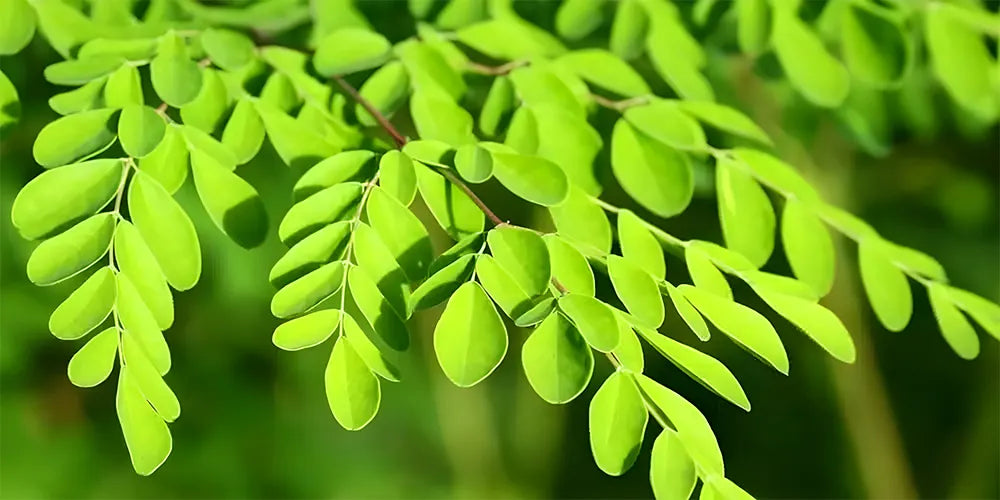
The leaves are, above all, the most nutritious and most widely used component. Rich in vitamins, minerals and antioxidants, they are harvested, dried and ground to obtain a practical, versatile powder, used in the production of supplements and herbal teas or as an ingredient to enrich healthy recipes.
The seeds of moringa are a precious resource, used mainly to extract an oil rich in essential fatty acids. This oil is widely used in cosmetics, where it is prized for its moisturising and protective properties for skin and hair. In addition, in some communities the seeds are used to purify water, thanks to their ability to act as natural coagulants.
The immature pods, also known as moringa fruits, are commonly eaten as a vegetable. Rich in fibre and protein, they are a nutritious and versatile food, ideal for preparing soups and traditional dishes.
The roots, on the other hand, are not used in our products and are not recommended during pregnancy. Moreover, unlike the other parts of the plant, the roots contain potentially toxic compounds, such as spirochin, which can cause side effects if not properly treated. For this reason their use is less widespread and is strongly discouraged without the supervision of an expert.
How RedMoringa powder is made
The powder comes from the leaves only, harvested and dried with the cell structure intact in a controlled environment, away from direct light, then finely ground. This way it keeps the characteristics of the fresh leaves and dissolves in water, smoothies, herbal teas and recipes.
The raw material comes from certified organic farms under the European standard (EU Organic logo) and is packaged in Italy, with batch traceability. That is the difference from uncertified powders: for those, neither the origin nor the analyses are known.
Read more: how to dry moringa leaves · organic Moringa powder
Why is moringa considered a miracle plant?
BECAUSE IT IS ONE OF THE RICHEST PLANTS IN NUTRIENTS: THE LEAVES CONTAIN POLYPHENOLS SUCH AS QUERCETIN AND CHLOROGENIC ACID, 43% PLANT PROTEIN (DRIED POWDER) AND ALL NINE ESSENTIAL AMINO ACIDS.
Contraindications of Moringa
Now that you know what moringa is, it is important to be aware of possible undesirable effects. The contraindications of moringa derive mainly from possible hypersensitivity to the active principles contained in the plant’s extracts.
Only some parts of moringa can cause undesirable effects; in particular, it is best to avoid taking the roots, trunk and branches of moringa, in any form, because they can cause abdominal pain and poisoning.
These effects are due to the presence of spirochin, an alkaloid that can adversely affect the nervous system. In addition, according to some studies, moringa roots may also have abortifacient properties; therefore, consumption of this part of the plant by women who are pregnant must be assessed by a doctor. We advise against it.
Excluding the parts indicated above, Moringa Oleifera has no particular contraindications.
How to take Moringa
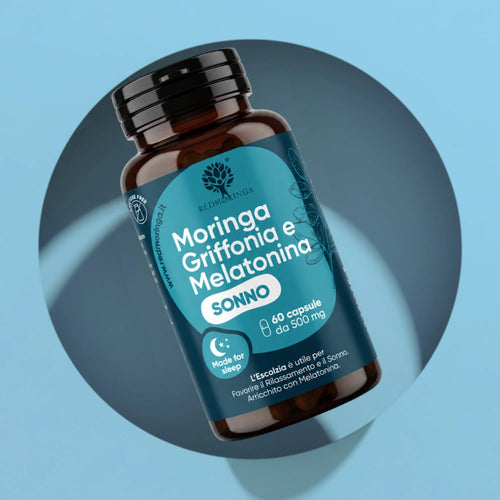
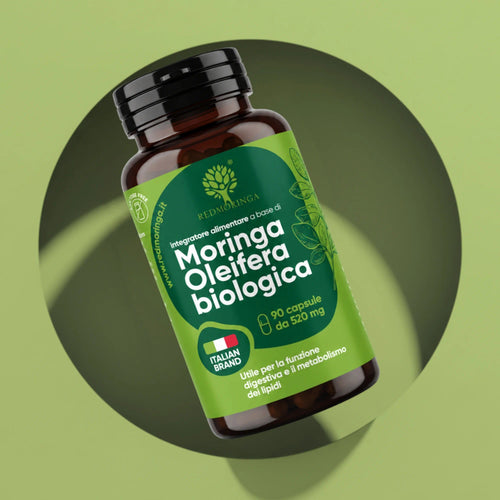
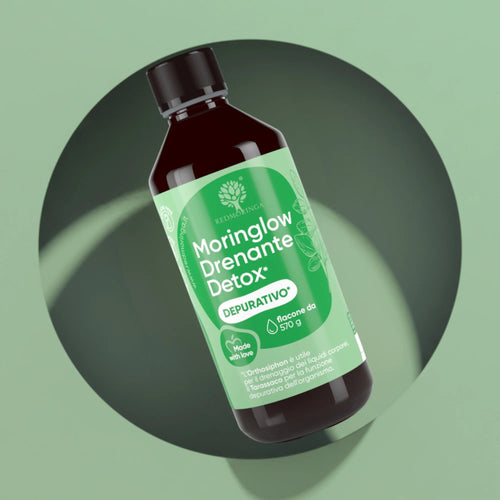
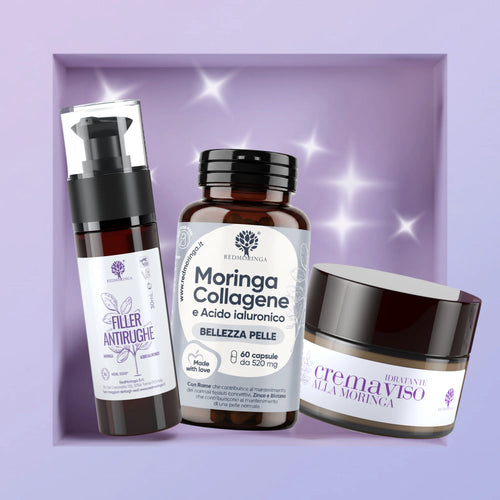
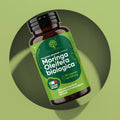
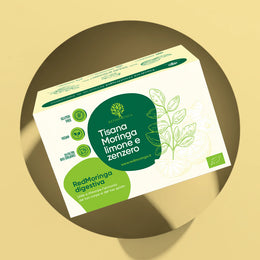
Moringa oleifera is available in several formats, including:
If you would like to learn more about the ways to consume it, we recommend reading our dedicated guide on how to take moringa, where you will find all the useful information to best incorporate this superfood into your daily diet.
Where to buy Moringa?
To get all the benefits of Moringa Oleifera, it is essential to choose high-quality products, preferably organic, so as to guarantee the absence of pesticides and the preservation of its extraordinary nutritional properties.
We also recommend that you always check the origin and certifications, favouring products made with controlled drying methods that preserve the plant’s qualities intact.
Read our article on where to buy Moringa to explore this point further, or visit our shop and discover the RedMoringa supplements to take care of your wellbeing in a totally natural way.
Frequently asked questions about moringa
What is moringa?
It is a tree of the Moringaceae family, native to north-western India and today also grown in Europe. The leaves are the part mainly used, dried and ground into powder.
What does moringa contain?
The leaves contain complete protein with all 9 essential amino acids, vitamins A, C and B-group, calcium, iron, potassium, magnesium and polyphenols such as quercetin and chlorogenic acid (see the table above).
How do you take it and how much?
As a powder (in smoothies, yoghurt, herbal teas), in capsules or as a herbal tea. The dose is the one indicated on the packaging of the product you choose; it is best to start with a small amount and increase gradually.
Who should avoid it?
Roots, trunk and branches must not be consumed; during pregnancy and breastfeeding, and for anyone taking medication, use should be discussed with a doctor.