



Your Dog's Cracked Nose: What Works and When to Worry
A dog's dry, cracked nose is one of those things you notice all of a sudden: yesterday it was smooth and moist, today it feels like sandpaper, perhaps with a little crust along the edge. Your first reaction is to google it, and your second is to find two opposite answers — «it's perfectly normal» and «it could be an autoimmune disease» — with no criterion whatsoever to work out which one applies to your dog.
This guide gives you that criterion. We start with a myth that needs dismantling, move on to the five signs that separate harmless dryness from a genuine problem, and finish with the remedies — including the one thing you must never do: smear on creams made for humans, because the zinc oxide they contain is toxic for an animal that licks its nose dozens of times a day.
The wet nose myth (and when dry is normal)
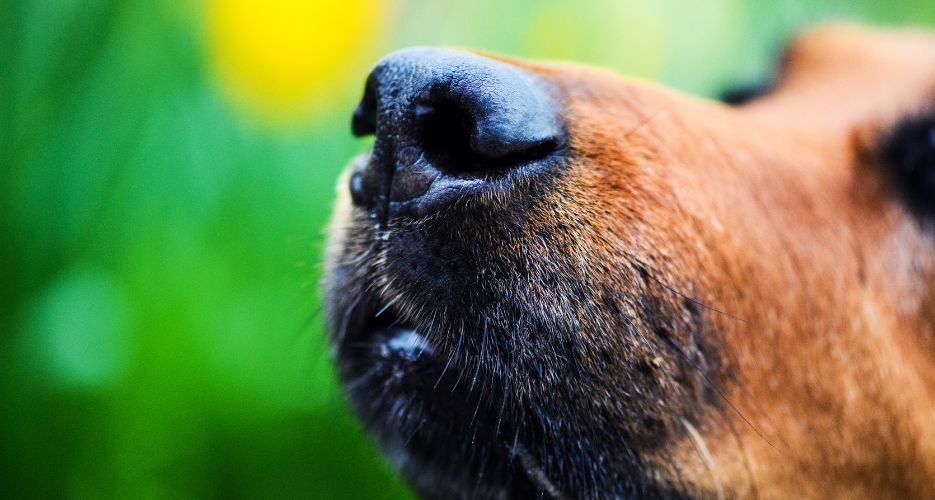
Let's begin with the equation everyone knows and that simply doesn't hold up: wet nose = healthy dog, dry nose = sick dog. A dog's nose is moist because the glands of the mucosa produce secretions that help capture scent molecules, and because the dog licks it constantly. But the level of moisture fluctuates throughout the day for reasons that have nothing at all to do with health.
The nose is normally drier on waking (a dog doesn't lick while it sleeps), after a snooze next to the radiator or an air vent, on very hot or very cold days, and simply with age: older dogs produce fewer secretions and lick themselves less. A dry nose on a dog that eats, drinks, plays and behaves exactly as usual is an observation, not a symptom.
The reverse is just as true: a perfectly moist nose guarantees nothing. The parameter to watch isn't moisture — it's any change in the surface itself, and everything going on around it.
The five signs that change the picture
Veterinary dermatology takes a precise approach to diseases of the nasal planum — the review by Citron (PMID 39757083) frames them by clinical presentation. For the owner, the triage boils down to five observations:
1. Crusts that come back or bleed. Simple chapping is dry and stable; thick crusts that keep re-forming, fissures that bleed, or any discharge are a different level altogether. 2. The colour. If the black of the nose lightens in patches (depigmentation) alongside the lesions, that's one of the signs vets take seriously — some immune-mediated dermatoses, such as cutaneous lupus, make their debut exactly there. 3. Just the nose, or elsewhere too? Simultaneous lesions on the paw pads, ear margins or around the eyes shift the suspicion from «dry nose» to «skin disease». Speaking of paw pads: we cover them in cracked paw pads in dogs. 4. The rest of the dog. Lethargy, loss of appetite, fever, discharge from a single nostril: the dry nose becomes a detail, because the picture is systemic. 5. Duration. Dryness that doesn't improve within 1-2 weeks despite basic care deserves a vet visit, even with no other signs.
None of these five? You can manage it at home, and that's what the rest of this guide is for. One or more? See your vet — not out of alarm, but for a diagnosis.
The specific causes worth knowing about
Nasal hyperkeratosis: the «bark-like» nose of older and brachycephalic dogs
With age, and markedly so in certain breeds, the keratin of the nose grows faster than it wears away: the result is that thickened, wrinkled nose, sometimes with fringe-like growths, so typical of the older dog. Brachycephalic breeds — bulldogs, pugs, boxers — are the most affected, because the flattened muzzle stops the tongue from reaching and «maintaining» the nose. It isn't dangerous, but it doesn't regress on its own either: you manage it, with an emollient as your main tool, for life.
Hereditary nasal parakeratosis of the Labrador
One particular, well-documented case: in Labrador Retrievers (and crosses) there is a hereditary form that appears as early as 6 to 12 months of age — a dry, grey, crusted nose in a very young dog that is otherwise perfectly healthy. It was characterised in the veterinary literature by Pagé (PMID 12662268), and a genetic test now exists. If you have a young Labrador with a chronically crusty nose, this phrase — hereditary nasal parakeratosis — is the one to bring to your vet.
The environmental causes nobody suspects
The sun: depigmented or pink noses burn, and repeated sunburn cracks the skin (and worse). Winter heating: the dry air indoors does to your dog's nose what it does to your lips — which is exactly why cases explode between November and February. Plastic bowls: contact dermatitis from plastic is real, it affects the nose and chin, and it clears up once you switch to stainless steel or ceramic. It's the first thing to try, because it costs five pounds. For the summer months, the full picture is in keeping your dog cool in summer.

What NOT to put on a dog's nose
This is the most important section of the guide, because the instinct to use «whatever's in the cupboard» does real damage here.
Human creams containing zinc oxide — which means most soothing pastes and barrier creams for nappy rash and skin irritation: zinc oxide is excellent on human skin, but a dog licks its nose dozens of times a day, and repeatedly ingested zinc is toxic to dogs — the veterinary literature documents cases of zinc toxicosis with haemolytic anaemia (Siow, PMID 30538939). The irony is that on zinc taken by humans, by mouth, we've written an entire guide — zinc: which form to choose — but on a dog's nose the rule is one and one only: none at all.
Essential oils (tea tree above all): toxic to dogs even in small doses, and the nose is the most direct route to ingestion. Vaseline and paraffin: not toxic in the strict sense, but licked off every day they end up in the gut, and on the nose they form an occlusive film that cures nothing. Human corticosteroid creams: never on your own initiative — if they're needed, the vet prescribes them after the diagnosis, not before it.
The rule that sums it all up: the only thing that belongs on a dog's nose is what is formulated to be licked.
The remedies that actually work
A specific emollient, backed by veterinary data
The good news is that for topical management there is now recent evidence: a prospective study by Viaud (PMID 41012718) evaluated a topical emollient in the management of canine nasal hyperkeratosis, with good tolerance and documented clinical benefit. And that is exactly the right category of product: a food-safe emollient balm, applied consistently, is the standard of care for dryness and hyperkeratosis alike.
The habits that remove the cause
Fresh water, always and in abundance — mild dehydration shows on the nose before it shows anywhere else; a humidifier (or even just a bowl of water next to the radiator) during the heating months; shade and sensible hours for pink noses in summer; a stainless-steel bowl instead of plastic, as mentioned above. None of these costs as much as a vet consultation, and together they resolve the majority of straightforward cases.
From the inside: skin is fed at the bowl
A dull coat and a chronically dry nose in a dog that has eaten cheap kibble for years are not a coincidence: omega-3 fatty acids and dietary zinc are the building blocks of the skin barrier in dogs just as they are in us. Before supplementing anything, it's worth reviewing the diet — we've written about it in our home-cooked diet for dogs guide — and for any dietary change, the vet remains the reference point.
How to apply a nose balm (the trick is in the timing)
The practical problem with any product on the nose is that the dog licks it off within ten seconds. The trick is not to prevent it — that's impossible — but to choose your moment: apply the balm just before mealtime, before the walk, or before a play session, when the dog's attention is elsewhere and the product has a few minutes to absorb. A small amount, massaged into the nasal planum with a clean finger; daily consistency for 1-2 weeks, then every other day as maintenance in chronic cases (older dogs, brachycephalic breeds, winter). That is the exact protocol our nose cream is designed around: a dense texture that stays put a few minutes longer, and a minimal amount per application.
And precisely because it will get licked off anyway: back to the earlier rule — only products formulated for exactly that.
Our approach
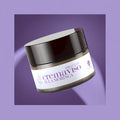
Our Chapped Nose Cream for Dogs and Cats is built precisely around the constraints in this guide: an emollient base with moringa oil, ingredients that are safe if licked, no zinc oxide, no essential oils, no fragrance. It is designed for the daily management of simple dryness and for maintenance in chronic cases — the hyperkeratosis of the older dog and the brachycephalic breeds — where the emollient is used for life and safety on ingestion is not a detail but the core requirement.
It also works on cracked paw pads, which share the same problem and the same solution. And for the owner whose hands spend the winter in the same state as their dog's nose, the Moringa Hand Cream is the human version of the very same logic.
Honest expectations on timing: simple chapping improves visibly within 3-7 days of consistent application; hyperkeratosis never disappears entirely — it softens and stays under control. If after two weeks of daily balm the nose looks the same or worse, you don't need more balm: you need the vet.
Maintaining the nose that does the work
It's worth remembering what we're actually protecting: a dog's nose is its primary instrument for reading the world, with an olfactory epithelium that outclasses ours by orders of magnitude. A cracked, painful nasal planum is not merely a cosmetic nuisance — a dog that avoids using its nose because it hurts is a dog that perceives less, and you'll recognise it in the behaviour before you see it on the skin.
Basic maintenance takes very little and happens during cuddle time: look at the nose once a week (colour, surface, symmetry of the nostrils — photos on your phone help you compare over time), clean only when needed and only with lukewarm water — no detergents, no scented wipes — and moisturise as soon as the surface starts to turn dull, without waiting for the crack. As with almost everything in this guide, the best moment to act is the one when it still feels too early.
Warm nose = fever? The other myth to retire
The twin of the moisture myth: «his nose is warm, he must have a temperature». The temperature of the nose depends on the surroundings, on activity and on the vasodilation of the moment — a dog that has been sleeping in the sun has a scorching nose and is perfectly healthy. There is only one reliable way to measure a dog's fever, and that's a rectal thermometer (the normal range is 38-39 °C, higher than ours: yet another reason dogs always feel «warm» to us). If you suspect a fever, look for the real signs — lethargy, shivering, loss of appetite — and measure. The nose is not a thermometer.
The nose calendar: what to expect season by season
Winter is peak chapping season: heating on, dry air indoors, cold outside — the same combination that splits our own lips. It's the period when the daily balm goes from optional to routine, especially for older and brachycephalic dogs. Spring: watch for allergies — a nose that runs and gets irritated along with red eyes and licked paws tells the story of a seasonal allergy, not of dryness. Summer: sunburn on pink and depigmented noses, with the middle hours of the day to avoid; some dogs also show the reverse «snow nose», a seasonal lightening of the nose leather that is benign and reversible. Autumn: the quiet season, perfect for sorting out the diet — if the coat and nose come out of summer looking dull, it's the moment for a dietary review, perhaps starting from the moringa benefits for dogs as a micronutrient top-up.
The seasonal pattern is itself a diagnostic criterion: chapping that comes and goes with the central heating or with the sun is environmental almost by definition. Chapping that ignores the seasons and steadily worsens is not — and that's one more clue to bring to the vet.
When to see the vet without waiting
Skipping every home remedy entirely: crusts that bleed or re-form as soon as they're removed, depigmentation that keeps advancing, lesions also on the paw pads/ears/around the eyes, nasal discharge from a single nostril, pain on touch, or a dog that has meanwhile become flat, off its food or feverish. Plus the young Labrador with the chronically crusted nose, for the genetic test mentioned above. In all these cases the balm isn't wrong — it's irrelevant: diagnosis first, management after. Bring along the photos you've taken over the preceding weeks, if you have them: to a vet, progression over time is worth as much as the current appearance, and a dated comparison shortens the road to the right diagnosis.
Frequently asked questions
Does a dry nose mean my dog is ill?
No. Nose moisture fluctuates throughout the day: it's normal to find it dry on waking, after a sleep near a heat source, in very cold weather or simply in an older dog. It only becomes a signal when it comes with recurring crusts, colour changes, lesions elsewhere on the body or a dog that is visibly under the weather: those are the criteria, not the moisture itself.
Can I put a human cream on my dog's nose?
No. Most human soothing pastes contain zinc oxide, which is toxic to dogs when repeatedly ingested — and a dog licks its nose dozens of times a day; the veterinary literature documents cases of zinc toxicosis with anaemia. Essential oils and over-the-counter corticosteroid creams should be avoided too. The only thing that belongs on the nose is a product formulated to be licked.
Why does my bulldog's nose always look crusty?
It's almost certainly nasal hyperkeratosis: in brachycephalic breeds the short muzzle stops the tongue from reaching the nose, so keratin builds up into that thick, wrinkled surface. It isn't dangerous but it won't regress on its own: it's managed with an ingestion-safe emollient, applied consistently, for life.
How long does a cracked dog nose take to heal?
Simple chapping improves visibly within 3-7 days of daily balm and resolves within a couple of weeks, especially if you correct the cause in the meantime (dry air, sun, a plastic bowl). Chronic hyperkeratosis, on the other hand, doesn't heal: it softens and is kept under control. If there's no improvement at all after two weeks, book a vet visit.
Can a dog's cracked nose be an autoimmune disease?
It can, and that's exactly why the warning criteria exist: immune-mediated dermatoses of the nasal planum, such as cutaneous lupus, typically present with progressive depigmentation, erosions and crusts that never heal, sometimes with lesions elsewhere too. They are the minority of cases, but they need diagnosing by a vet, not managing with a balm.
Is the nose cream suitable for paw pads as well?
Yes: the nose and the paw pads share the same type of keratin and the same problems — environmental dryness, hyperkeratosis, cracking — and an ingestion-safe emollient works for both, because dogs lick their paws too. The same timing rule applies: apply just before mealtime or the walk.
Chapped Nose Cream for Dogs and Cats
A moringa-oil emollient formulated to be licked: no zinc oxide, no essential oils — the rule of this guide, turned into a product.
Discover the product →