
Zinc: Which Form to Choose — Doses and Contraindications

Anyone looking up zinc is usually already a step past the «what is it for» stage: they are staring at two labels — one says picolinate, the other bisglycinate, a third gluconate — and none of them explains the difference. It is the mineral with the widest gap between how important it is and how badly it is explained: involved in over three hundred enzyme reactions, and sold in forms that can differ considerably in what the body actually absorbs.
This guide is built around the very question the others skip: which form of zinc to choose, with the documented differences in absorption, the doses beyond which you do yourself harm (yes, they exist, and the mechanism is a curious one: excess zinc steals copper), and the enormous misunderstanding surrounding the most searched-for form of all — the oxide.
What zinc does, in an honest summary
Zinc is a cofactor: it does not «do» things, it allows enzymes to do them. The claims recognised at European level cover the normal function of the immune system, the maintenance of normal skin, hair and nails, the protection of cells from oxidative stress, the maintenance of normal testosterone levels in the blood and of normal vision, along with normal DNA synthesis and fertility.
Translated into practice: if your levels are adequate, more zinc will not give you more immunity or more testosterone. If they are low — and we will see who is genuinely at risk — restoring them restores functions that had degraded. Zinc works like fuel: a full tank does not make the car go faster, but an empty one brings it to a stop.
The forms compared: which zinc to choose
This is where an informed purchase parts ways with a random one. A recent comparative review by Devarshi (PMID 39770891) lined up the human data on the bioavailability of the different forms: the differences are real, and the general rule is that organic forms (bound to amino acids or organic acids) are absorbed better than inorganic ones.
Zinc picolinate — absorption as the selling point
Here the zinc is bound to picolinic acid, a chelating agent the body itself produces to transport the mineral. It is the form with the best reputation for absorption, supported by historical data that are limited but consistent with the logic of chelates. It is a sensible choice when the goal is to correct an insufficient intake with modest doses.
Zinc bisglycinate — the best tolerated
Chelated with two glycine molecules, like the magnesium bisglycinate we have written about before: same logic, same advantage. Absorption is good and, above all, it is the gentlest form on the stomach — which matters, because nausea from zinc taken on an empty stomach is the most common side effect in the whole category. If zinc has upset your stomach in the past, this is the form to try.
Gluconate and citrate — the honest middle ground
Gluconate is the form used in the common-cold studies and in many pharmacy products: decent absorption, low cost, no serious flaw. Citrate, in head-to-head comparisons, is absorbed almost identically to gluconate. They are not the best forms, but they are a long way from being a mistake — the real mistake is a different one, and it is the next paragraph.
Zinc oxide: the great misunderstanding
It is the most searched-for form of all, and almost everyone searches for it for the wrong reason. Zinc oxide lives two completely different lives.
On the skin it is excellent: it is the physical filter in sunscreens, the base of barrier pastes for irritation and nappy rash, a dermatology classic for a century. There it does not need to be absorbed — it needs to stay on the surface, and that is exactly what it does.
Taken by mouth it is the worst form in the category: in bioavailability comparisons it sits consistently at the bottom, with an absorption that in some studies is a fraction of that of the organic forms. But it costs next to nothing, so it fills cheap multivitamins — where it inflates the number on the label («15 mg of zinc!») that the body will only ever see in part.
The rule is simple: oxide on the skin, yes; in a capsule, no. If the label of your supplement reads «zinc oxide», the low price has an explanation.

Doses: how much, when and how far
The daily requirement is roughly 8-11 mg (women-men), and a normal omnivorous diet gets there, or very close. For supplementation, the typical doses of serious products sit between 10 and 15 mg: enough to cover a low intake, far from the threshold where the problems begin.
That threshold exists: the European safety limit for chronic intake from supplements is 25 mg per day. It is not a theoretical number — above it, and for months on end, you enter the territory of zinc's most insidious side effect, the one we discuss below.
On timing: zinc on an empty stomach is absorbed better but makes many people nauseous; taking it with a light meal is the practical compromise. Keep it at least two hours apart from high-dose iron and calcium supplements, which compete for absorption, and from large amounts of dairy.
Side effects: nausea and the copper theft
The most common acute effect is nausea on an empty stomach, typical of the less tolerated forms and of high doses. It is managed by changing form (bisglycinate) or by taking it with food.
The chronic one is more interesting, and almost nobody explains it: excess zinc induces the body to block the absorption of copper. Zinc stimulates a protein in the gut (metallothionein) that traps both minerals, but binds copper more avidly: with high, prolonged doses of zinc, the copper stays sequestered and a deficiency develops — with anaemia, a drop in white blood cells and, in protracted cases, neurological problems. This is why well-designed hair formulations pair copper and zinc together: we covered it in copper and zinc for hair.
Interactions worth knowing: zinc reduces the absorption of certain antibiotics (quinolones and tetracyclines — separate them by at least two hours) and of bisphosphonate medicines for osteoporosis. Anyone taking these should speak to their doctor before supplementing.
Zinc and the common cold: what the studies actually say
It is zinc's most famous claim and it deserves precision, because here the form matters more than ever. The individual-patient-data meta-analysis by Hemilä (PMID 27378206) concerns zinc acetate lozenges dissolved in the mouth, started within 24 hours of the first symptoms: there, the duration of the cold shortens significantly.
Note carefully what it does NOT say: it does not speak of capsules to swallow, and it does not speak of prevention in well-nourished people. The hypothesised mechanism is local — the zinc ion in contact with the mucous membrane of the throat — which is why the lozenge works and the capsule does not. A daily zinc supplement makes sense to keep the immune system functioning normally when intake is low, not as a cold remedy. The complete picture on immune defences is in how to strengthen the immune system.
Zinc and skin: the acne case
Here the data are more interesting than the marketing itself lets on: the systematic review with meta-analysis by Yee (PMID 32860489) found that people with acne have serum zinc levels that are lower on average, and that treatment with zinc significantly improves papule counts compared with control. It is not a cure — it is one of the few supplements with genuine data on this problem, and it is the rationale behind pairing it with moringa in our product. For the broader skin picture, with biotin and copper, the guide is zinc, biotin and copper for the skin.
Before the supplement: zinc on your plate
No capsule beats a well-absorbed food source, and for zinc the hierarchy is clear-cut. Oysters are off the scale (a single serving covers days of requirement); then come red meat, crab, eggs and mature cheeses. Plant sources — pulses, pumpkin seeds, cashews, wholegrains — contain respectable amounts on paper, but with a caveat that changes the maths: phytates, found precisely in those foods, bind zinc in the gut and reduce its absorption considerably.
It is a paradox nutritionists know well: the diet rich in wholegrains and pulses — excellent for almost everything else, fibre included — is also the one that absorbs the least zinc per gram eaten. Two kitchen counter-moves reduce the problem: soaking pulses and grains (phytates are water-soluble and partly break down) and the long fermentation of bread, where the phytase in sourdough does the work. They do not erase the gap; they narrow it.
The practical consequence: an omnivore who eats meat two or three times a week will rarely need zinc in capsules. Anyone on a plant-based diet covers it with more difficulty than the nutrition tables suggest — and that is where supplementation stops being an optional extra and becomes a sensible correction.
Zinc and hair: what to actually expect
It is the second reason zinc gets bought, and it deserves calibrated expectations. Zinc takes part in keratin synthesis and in the division of follicle cells: in people who are deficient, diffuse shedding and brittle hair are among the first signs, and correcting the deficiency reverses them. In people with normal levels, on the other hand, adding zinc does not speed up growth and does not thicken anything — the follicle does not work any faster on more fuel than it needs.
The practical signal for suspecting that zinc is involved: the shedding comes together with other deficiency symptoms — white spots on the nails, wounds that heal slowly, a dulled sense of taste — or you belong to one of the at-risk categories in the next section. In that case the copper-zinc pair makes sense (because of the copper-theft mechanism seen above), and the evaluation window is long: hair grows one centimetre a month, so results are judged at three months, not at three weeks.
How to read the label of a zinc supplement
Four checks that separate a serious product from one built to look like it.
The form, spelt out in full. «Zinc» on its own means nothing: a serious label declares «zinc bisglycinate», «zinc picolinate», «zinc oxide». If the form is not specified, when in doubt it is the cheapest one — and you have read above which one that is.
Elemental zinc, not the weight of the compound. 50 mg of zinc gluconate contains roughly 7 mg of actual zinc: some labels declare the compound to inflate the number. The value that counts is the one next to «% NRV» — if it says 100%, that is 10 mg of elemental zinc.
The dose against the limit. Products exceeding 25 mg of elemental zinc per daily dose sit above the European chronic safety limit: for an everyday over-the-counter supplement there is no good reason to be up there.
What sits alongside it. Copper in hair formulas (for the mechanism seen above), vitamin C in immune formulas: sensible pairings follow physiology. Twelve minerals at homeopathic doses in a single capsule follow marketing instead.
Who genuinely risks a deficiency
The symptoms — slow wound healing, brittle nails with white spots, a dulled sense of taste and smell, frequent infections, shedding hair — are non-specific. It is more useful to know who is at risk: vegetarians and vegans (the phytates in wholegrains and pulses sequester zinc), the over-65s (reduced absorption and poorer diets), hard-training athletes (losses through sweat), anyone on long-term proton pump inhibitors, and anyone who drinks heavily. The best dietary zinc remains the animal kind — oysters, meat, eggs — because it comes free of phytates; those who do not eat it start at a disadvantage and supplementation makes more sense — and that is the case where a zinc in organic form repays the difference in price. For zinc's role in protein synthesis, the connection is with amino acids: what they are, whose enzymatic partner it is.
Our approach
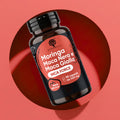
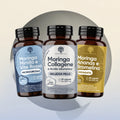
Our Zinc and Organic Moringa is built on the logic of this guide: zinc at a sensible dose — far from the 25 mg limit, inside the territory where the mineral works without stealing copper — paired with Moringa oleifera, which brings the array of micronutrients and polyphenols that zinc serves as a cofactor for. It is the choice for skin and immune defences, with the acne case as its best-documented terrain.
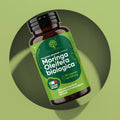
If the focus is the immune system in the cold season, Acerola, Zinc and Moringa adds the natural vitamin C of acerola — the two EFSA claims on immune defences stack up. And the Organic Moringa Oleifera capsules remain the daily foundation; on why antioxidants work as a network rather than alone, the guide is antioxidant supplements.
Honest timelines: for skin, hair and nails, zinc is judged at 8-12 weeks — the turnover time of those tissues — not at two. For immune defences, the whole season is the right yardstick. And as with everything else in the catalogue, the evaluation criterion should be written down before you start: the state of your nails, how many times you fell ill last winter, a photo of your hairline — because gradual improvement is exactly what memory fails to record.
Frequently asked questions
Which is the best form of zinc?
For absorption and tolerability, the chelated forms: picolinate if the goal is absorption, bisglycinate if zinc has made you nauseous in the past. Gluconate and citrate are honest compromises. The oxide is the worst form for oral use — on the skin, on the other hand, it is excellent.
Should zinc oxide in capsules be avoided?
It has the lowest bioavailability in the category: a substantial part of the dose declared on the label is never absorbed. It is found in cheap products precisely because it costs so little. On the skin it is a different story: as a physical sun filter and in soothing barrier pastes it is excellent, because there it does not need to be absorbed.
How much zinc can you take per day?
The requirement is 8-11 mg; sensible supplementation sits around 10-15 mg. The European safety limit for chronic use is 25 mg per day from supplements: exceeding it for months induces copper deficiency, with anaemia and weakened immune defences. More is not better.
Does zinc cure the common cold?
The positive data concern zinc acetate lozenges dissolved in the mouth, started within 24 hours of symptoms: the meta-analysis shows a reduction in duration. Capsules you swallow do not have the same effect, because the hypothesised mechanism is local, on the mucous membrane. Daily supplementation serves to keep the immune defences normal when intake is low, not to treat a cold already under way.
Does zinc increase testosterone?
Zinc contributes to the maintenance of normal testosterone levels in the blood — a recognised claim — but the key word is «normal»: in someone who is deficient, replenishing restores; in someone with adequate levels, adding zinc does not raise them. Anyone promising booster-like effects is selling the wrong mechanism.
Is it better to take zinc in the morning or in the evening?
The time of day matters little; the stomach and the interactions matter. Take it with a light meal to avoid nausea, at least two hours apart from iron or calcium supplements and from large amounts of dairy, and well away from quinolone or tetracycline antibiotics if you are taking them. Daily consistency is worth more than the hour on the clock.
Zinc and Organic Moringa
Zinc at a sensible dose, far from the 25 mg limit, with the micronutrient array of moringa — for skin and immune defences, without stealing copper.
Discover the product →