


Lion's Mane Mushroom: What Is It, and What Can It Really Do?
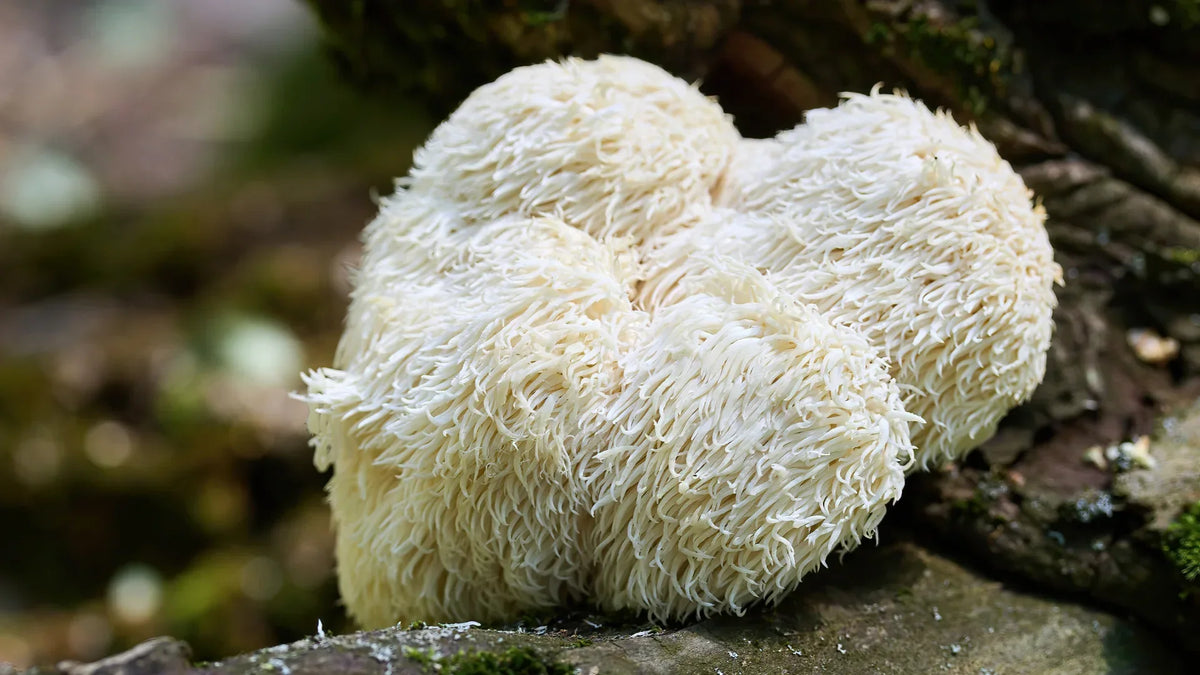
Imagine a mushroom that resembles a lion's mane — completely white, with spines hanging down like hair. It's unusual, it's beautiful, and it's one of the most intensely researched medicinal mushrooms — because it's the only mushroom known in nature that stimulates the endogenous synthesis of Nerve Growth Factor (NGF).
What is Lion's Mane? Botany, Names, and Origin
Hericium erinaceus is a basidiomycete from the family Hericiaceae, which grows on hardwood trunks in temperate forests of Europe, Asia, and North America. Names: Lion's Mane (UK/USA), Yamabushitake (Japan), Hou tou gu (China).
The fruiting body — the visible white part — is the main source of Hericenones. The mycelium produces the Erinacines — two different families of molecules with complementary mechanisms of action.
Active Ingredients: Hericenones and Erinacines
- Polysaccharides (Beta-Glucans): immunomodulatory and antioxidant effects.
- Hericenones (A-H): Diterpenes in the fruiting body that stimulate NGF synthesis.
- Erinacines (A, B, C, and over 15 others): Cyathane diterpenoids in the mycelium that cross the blood-brain barrier and promote neurogenesis.
- Phenolic compounds and sterols: antioxidant and anti-inflammatory effects.
What is Nerve Growth Factor and Why is it Important?
NGF is a neurotrophin essential for the survival and maintenance of neurons. Its production physiologically decreases with age. The hericenones and erinacines from Hericium erinaceus act as endogenous NGF inducers — they stimulate the body's own cells to produce more NGF.
A systematic review (Spangenberg et al.) published in Frontiers in Pharmacology in 2025 confirmed dose-dependent benefits in cognitive function and depressive-like symptoms. (DOI: 10.3389/fphar.2025.1582081)
Cognitive Effects: What Does Current Research Say?
A PRISMA review in Frontiers in Nutrition 2025 (Menon et al.) analyzed 5 RCTs and other studies. Aggregated data show a weighted mean improvement of 1.17 points in MMSE in the intervention group. (DOI: 10.3389/fnut.2025.1641246)
A 2025 review in Nutrition Research Reviews (Cornford & Charnley) investigated the potential for Alzheimer's prevention: Erinacine-A-enriched formulations show the highest bioactive potency. (DOI: 10.1017/S0954422425000058)
Mood, Anxiety, and Gut Health
- Increase in pro-BDNF and BDNF: mood regulation and stress resilience.
- Promotion of hippocampal neurogenesis.
- Reduction of depression and anxiety symptoms in some clinical studies.
- Improvement in gut microbiota diversity with an increase in SCFA-producing bacteria.
Contraindications: When is Caution Advised?
- Mushroom allergy: at least one anaphylactic shock documented after fresh consumption.
- Pregnancy and breastfeeding: insufficient safety data.
- Autoimmune diseases: possible interference with immunosuppressants.
- Anticoagulant therapy: possible interaction.
- Upcoming surgeries: discontinue at least 2 weeks prior.
When Does Lion's Mane Start to Work?
- Cognitive function: studies use 8-16 weeks of administration.
- Mood and anxiety: subjective improvements from 4 weeks in pilot studies.
- Gut health: changes in microbiota after approximately 4-6 weeks.
How to Recognize a High-Quality Extract?
- Polysaccharide titration: at least 20-30% declared.
- Fruiting body vs. mycelium: grain-based mycelium without separation = enriched flour.
- No grain residues.
- HPMC capsule: plant-based.
- No unnecessary additives.
Lion's Mane Jelly and Lion's Mane Jellyfish: The Same Mushroom?
No. The Lion's Mane Jellyfish (Cyanea capillata) is a jellyfish — it has nothing in common with the mushroom Hericium erinaceus except the name. No relevance to mycotherapy, no documented medicinal properties.
Would you like to try Lion's Mane as a standardized dry extract?
Discover Lion's Mane Oravita by RedMoringa — Hericium-erinaceus extract with certified Beta-Glucans, HPMC capsules, made in Italy.
To the productSources
- Menon A et al. (2025). Benefits, side effects, and uses of Hericium erinaceus as a supplement. Front Nutr. DOI: 10.3389/fnut.2025.1641246
- Spangenberg ET et al. (2025). Unveiling the role of erinacines in Hericium erinaceus. Front Pharmacol. DOI: 10.3389/fphar.2025.1582081
- Cornford N, Charnley M. (2025). Hericium erinaceus: possible treatment for Alzheimer's disease? Nutr Res Rev. DOI: 10.1017/S0954422425000058
This content is for informational purposes only. Please consult your doctor or pharmacist.