

Reishi: What is Ganoderma lucidum, and what can it really do?
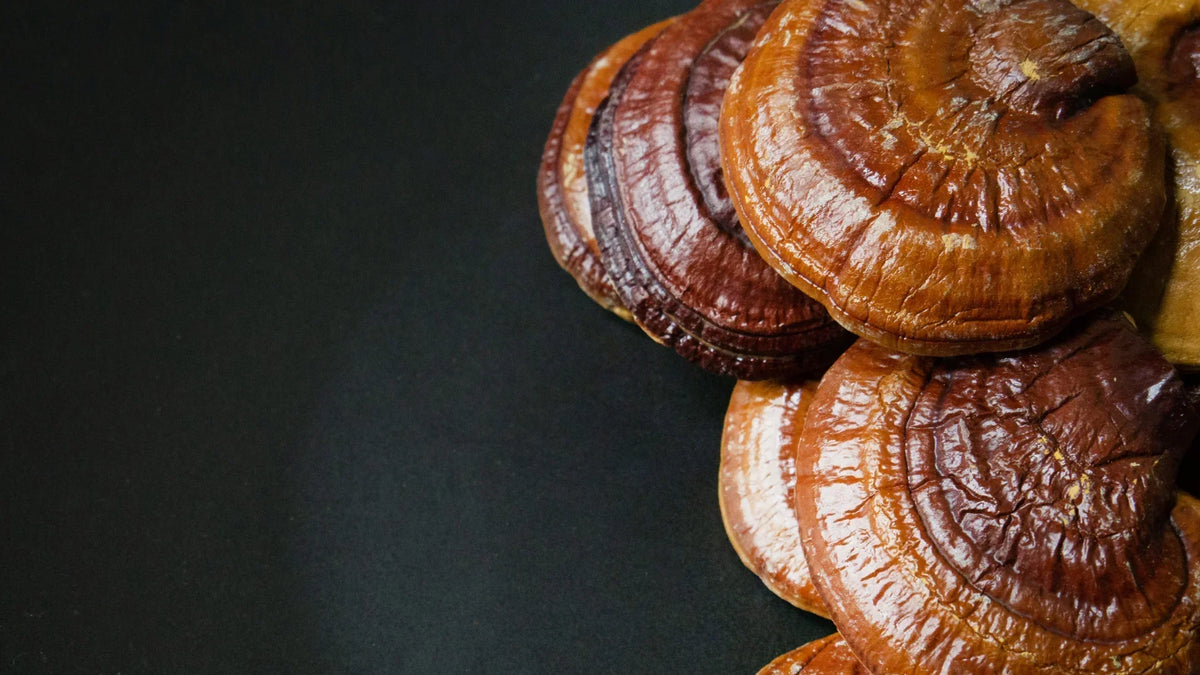
Seven thousand years of documented history. A Chinese name meaning "divine mushroom." More than 4,000 scientific publications on PubMed. And yet: If you search for "Reishi" in an online shop today, you will mostly find non-standardized powders of dubious origin.
What is Reishi? Botany, History, and Names
Reishi (Ganoderma lucidum) is a basidiomycete from the family Ganodermataceae. In nature, it grows on hardwood trunks in the temperate and subtropical zones of Asia, Europe, and North America. Wild Reishi is extremely rare; almost the entire market supply comes from controlled cultivation.
Its names: Lingzhi in Chinese — "divine mushroom" —, Reishi in Japanese, Yeongji in Korean. In science: Ganoderma lucidum.
Ingredients of the Reishi Mushroom
- Polysaccharides (Beta-Glucans, Ganoderan A and B): immunomodulating and antioxidant effects. A high-quality extract specifies the titrated percentage — 20-40%.
- Triterpenes (Ganoderic acids A, B, C, D, and over 140 others): hepatoprotective, anti-inflammatory, and potentially blood pressure-lowering effects.
- Bioactive peptides (including LZ-8): Modulation of adaptive immune responses.
- Sterols, Vitamin D2, Zinc, and organic Germanium.
Effects and Benefits: What does science say?
Immunomodulation
A systematic review (Thuy et al.) published in Cureus in 2023 evaluated 90 studies and confirmed consistent immunomodulatory effects — extracts with broken spore walls showed significantly higher efficacy. (DOI: 10.7759/cureus.44574)
Liver protection and antioxidant effects
A review (Plosca et al.) published in Antioxidants in 2025 confirms the documented antioxidant, hepatoprotective, and anti-inflammatory benefits. (DOI: 10.3390/antiox14050513)
Sleep and recovery
Certain triterpenes appear to interact with the GABAergic system. Clinical data in humans are still preliminary.
Contraindications: When should caution be exercised?
- Anticoagulant therapy (Warfarin, Heparin, DOACs): Triterpenes can enhance anticoagulant effects.
- Pregnancy and breastfeeding: insufficient safety data.
- Autoimmune diseases: possible interference with immunosuppressants.
- Upcoming surgeries: discontinue at least 2 weeks beforehand.
- Already low blood pressure: close monitoring.
How long until Reishi takes effect?
- Immunity and well-being: at least 6-8 weeks of continuous intake.
- Blood parameters: first changes after 4-8 weeks.
- Sleep quality: subjective improvements for some individuals after 2-3 weeks.
How to recognize a high-quality Reishi extract?
A study (Risoli et al.) published in Nutrients in 2023 showed that many European mushroom preparations do not meet the declared specifications. (DOI: 10.3390/nu15030776)
- Polysaccharide titration: At least 20-30% declared.
- Extract type: standardized dry extract ≠ dried mushroom powder.
- European manufacturing with traceability.
- No unnecessary additives: no magnesium stearate.
- HPMC capsule: plant-based.
Would you like to try Reishi as a standardized dry extract?
Discover Reishi Oravita by RedMoringa — Ganoderma-lucidum extract with certified polysaccharides, HPMC capsules, made in Italy.
To the productSources
- Plosca MP et al. (2025). Ganoderma lucidum — From Ancient Remedies to Modern Applications. Antioxidants (Basel). DOI: 10.3390/antiox14050513
- Thuy NHL et al. (2023). Pharmacological Activities and Safety of Ganoderma lucidum Spores. Cureus. DOI: 10.7759/cureus.44574
- Risoli S et al. (2023). Mushroom-Based Supplements in Italy: Let's Open Pandora's Box. Nutrients. DOI: 10.3390/nu15030776
This content is for informational purposes only and does not substitute for medical advice. Please consult your doctor or pharmacist before taking any supplements.