

Where to buy moringa: channels, real price and 7 label checks
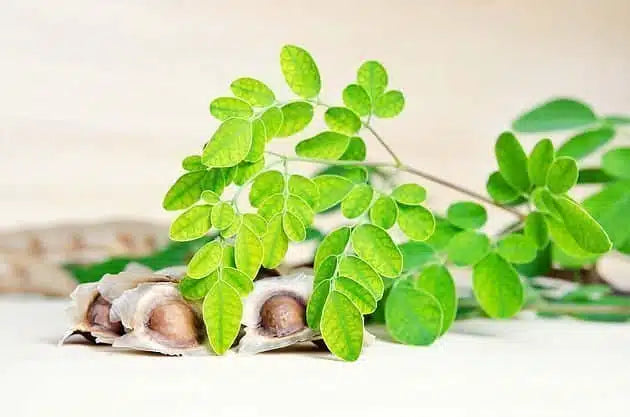
In Italy, moringa is mostly bought online, from producers' own shops and on marketplaces; then in herbalist shops, organic stores and, to order, in pharmacies. Plants and seeds are sold by nurseries and seed websites, while fresh leaves are rare: a few Indian grocery stores carry them, often frozen. Where you buy matters less than what you buy, though: two products at the same price can contain very different amounts of leaf, and a one-minute look at the label tells you which.
Here you will find the channels one by one, what to know if you are after the plant, the seven checks to make on the label and the sum almost nobody does: what a day of moringa really costs, and what a gram of leaf costs. Moringa has been our plant since 2019: we choose it, have it tested and pack it in Italy, which is why we know where the differences hide. By Luca Gilardi, updated on 26 November 2026.
Where to buy moringa in Italy: the channels compared
The best-stocked channel is online, where you find moringa capsules, powder, herbal teas and oil from dozens of brands. Herbalist and organic shops have a smaller range, but you can ask for advice; in pharmacies moringa is rarely on the shelf, but it can often be ordered. Each channel has a different weak spot, and that is the one to check.
| Where | What you find | What to watch out for |
|---|---|---|
| The producer's online shop | Every format, multi-pack offers, often a subscription | That the full label is published on the page, not just the promises |
| Amazon and other marketplaces | The widest choice, fast delivery | Who is really selling: check "sold by" and "ships from", and whether the brand matches the seller |
| Herbalist and organic shops | Few brands, advice in person | The price per gram of leaf, often higher for the same product |
| Pharmacies and drugstores | Rarely on the shelf, often available to order | Ask for the exact product name: "moringa" alone is not enough to order it |
| Supermarkets | Rarely, and almost always as powder | Origin and organic certification, which are not always clearly stated |
| Indian or Asian grocery stores | Sometimes leaves and pods ("drumsticks"), often frozen | They are vegetables, not supplements: no doses and no supplement-grade testing |
| Nurseries and seed websites | Young plants and seeds | How fresh the seeds are and the climate where you live (see the next chapter) |
A note on marketplaces, because that is where most "moringa amazon" searches end up. The same product can be sold by several shops, and the listing can stay identical even when the shipper changes. If you are buying for the brand, check that the seller is the brand itself or a retailer you know.
The plant and fresh leaves: what to know before buying
Moringa plants are sold by nurseries and online, but in Italy they only thrive outdoors where winters are mild; elsewhere they need to live in a pot and be sheltered from the cold. It is a tropical tree: a review from the University of Milan gives ideal conditions as temperatures between 18 and 28 °C and 760 to 2,500 mm of rain a year (Leone, 2015).
If you start from seeds, freshness counts for more than the brand. In the same review, germination reaches 80-90% when seeds are stored cool and dry, around 3 °C and at 5-8% moisture, while at room temperature and in a humid environment their viability drops quickly (Leone, 2015). In practice: buy seeds from a recent harvest, from someone who states the date, and sow them soon. We have gathered the steps in how to grow moringa at home; if you are interested in the seeds for other uses, everything is in what moringa seeds are used for.
Fresh leaves are the hardest product to find in Italy. They keep for only a few days, so they arrive almost exclusively frozen, in Indian grocery stores. A potted plant gives enough of them in summer to cook them the way you would cook spinach. For the rest of the year, the practical form is the dried leaf: as powder, in capsules or as a herbal tea.
What to check on the label: seven checks in one minute
A well-made moringa label tells you which part of the plant is inside, how many milligrams of leaf you take each day, what else it contains and who certified it as organic. If any of these four pieces of information is missing, that is already a reason to look elsewhere. These are the checks we make ourselves when we assess a supplier, in the order we would make them standing in front of a shelf.
- Botanical name and part of the plant. It must say Moringa oleifera and the part used: "leaves". On the Italian Ministry of Health's list of plants allowed in food supplements, moringa has two recognised physiological effects: it is useful for digestive function and for lipid metabolism.
- Milligrams of leaf per daily dose. The weight of the capsule is not enough: you need the amount of leaf in the daily dose. Two bottles of 90 capsules can differ a lot if one asks for one capsule a day and the other for three.
- What else is inside. Bulking agents, anti-caking agents and flavourings are not banned, but they take up room that could be leaf. And look at the capsule: a plant-based one is made of hydroxypropyl methylcellulose (HPMC), a gelatine one is of animal origin.
- Organic, in full. The EU logo must come with the code of the control body (in Italy it takes the form IT-BIO-000) and with the place where the raw materials were farmed: "EU Agriculture", "non-EU Agriculture" or "EU/non-EU Agriculture" (Reg. (EU) 2018/848). A big "organic" with no code is not a certification.
- Notification to the Ministry of Health. Food supplements sold in Italy must be notified to the Ministry before they reach the market. You can look the product up in the public register of food supplements on the Ministry's website.
- Batch testing. A leaf that grows in soil carries with it whatever is in that soil. For food supplements, EU law sets precise limits: 3.0 mg/kg of lead, 1.0 mg/kg of cadmium and 0.10 mg/kg of mercury (Reg. (EU) 2023/915). A serious producer has every batch tested and tells you which parameters it checks: not just "tested", but what and with what result.
- The promises. "Slimming", "fat burning", "cures" or "detoxes the liver" are not allowed on a moringa supplement. And a "source of vitamins" with no figures says little: the same University of Milan review reports, for vitamin C in dried leaves, values from 17 to 271 mg per 100 g depending on the source; within a single Indian study, the figure went from 140 mg with shade drying to 92 mg with sun drying and 56 mg with oven drying (Leone, 2015). If a value matters, it must be written down.

What moringa really costs: per day and per gram
To compare two moringa products you need two numbers: the cost of one day at the stated dose and the cost of one gram of leaf. The pack price on its own is misleading, because packs last different lengths of time and contain different amounts of leaf. The sum takes thirty seconds with the information on the label.
The formula is simple. Cost per day = price ÷ days the pack lasts. Cost per gram of leaf = price ÷ total grams of leaf, that is milligrams per capsule × number of capsules ÷ 1,000. Here is the sum for our two main formats, at today's prices on our website:
| Format | Price | Leaf in the pack | Daily dose | Lasts | Per day | Per gram of leaf |
|---|---|---|---|---|---|---|
| Capsules, bottle of 90 | €24.90 | 37.8 g (420 mg × 90) | 3 capsules, 1,260 mg | 30 days | €0.83 | €0.66 |
| Capsules, 6 bottles | €105.12 | 226.8 g | 3 capsules, 1,260 mg | 6 months | €0.58 | €0.46 |
| Powder, 175 g pouch | €18.00 | 175 g | 8 g, one tablespoon | about 22 days | €0.82 | €0.10 |
The result surprises almost everyone. Per gram, powder costs about a sixth of capsules; per day, they cost roughly the same, because the powder dose is more than six times higher. With capsules you pay for not tasting it and for having the dose ready; with powder you put more leaf on your plate for the same money. Neither is "the right one" in absolute terms: it depends on how you will use it.
Do the same sum with any other product. A bottle of 120 capsules of 500 mg, at one capsule a day, lasts four months but gives you 500 mg of leaf a day, less than half our dose; if it costs €20, a gram of leaf costs you €0.33. These are numbers that change the comparison, and nobody in a shop works them out for you.
Capsules, powder or herbal tea: which format to buy
Capsules are the format for people who want a ready dose with no taste; powder is for people who cook and want more leaf on their plate; herbal tea is for those who want a warm ritual after meals. The starting material is the same, the dried leaf, but the amount and the way you take it change.
- Capsules: three a day, 10-30 minutes before meals, with a glass of water. How many and when, in detail, in moringa capsules: how many a day and when.
- Powder: one tablespoon a day in yoghurt, smoothies, soups or doughs. It has a strong, grassy taste; you will find ways to use it in how to use moringa powder.
- Herbal tea: dried leaves in tea bags, often with other plants. The amount of leaf is lower, but it is the easiest way to start.
If you are choosing between different brands and formats, we have compared the criteria in which moringa to choose. And if you have read amazing things about moringa, stop by the myths about moringa before you buy.
Where to buy RedMoringa moringa
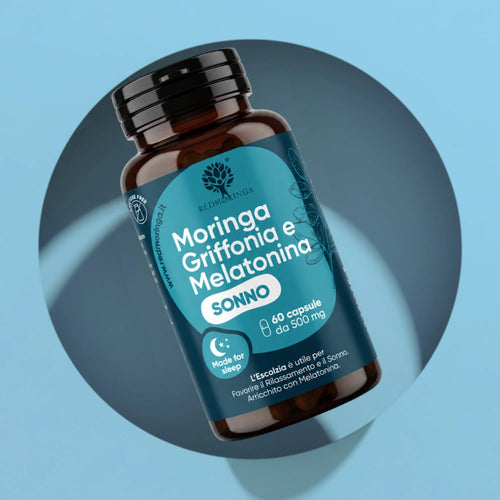
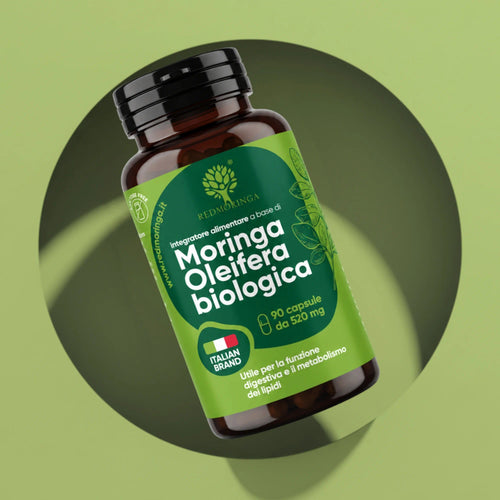
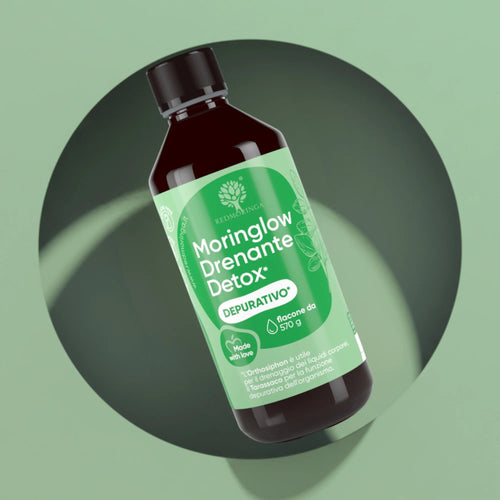
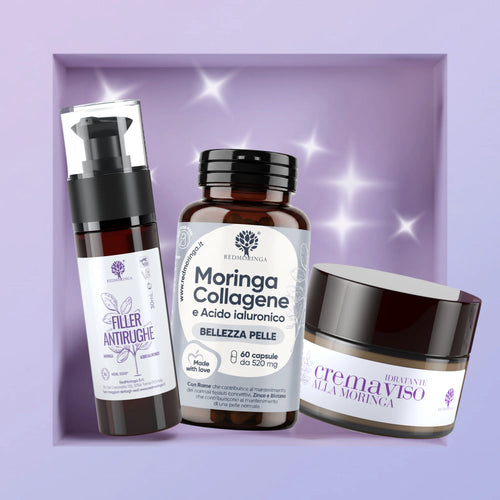
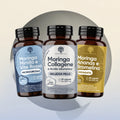
You can buy our moringa on the RedMoringa website, with offers on multi-packs, on Amazon and on TikTok Shop, sold by us, and from the online pharmacy Redcare. Outside Italy it is also arriving in TK Maxx stores in several European countries. It is the same moringa in every channel: Moringa oleifera leaf powder only, from certified organic farms, organic certification IT-BIO-004, packed in Italy.
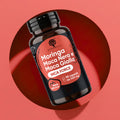
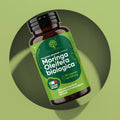
- Organic Moringa Oleifera capsules: 420 mg of leaf per capsule, 1,260 mg in the three daily capsules, plant-based HPMC capsule, no bulking agents or flavourings. A bottle of 90 capsules lasts one month: €24.90, €59.13 for three bottles, €105.12 for six. On our website there is also a subscription, monthly or quarterly.
- Organic Moringa Powder: dried and ground leaves only, recyclable 175 g pouch at €18.00. Per 100 g: 29.7 g of protein and 17.1 g of fibre, very low in sodium.
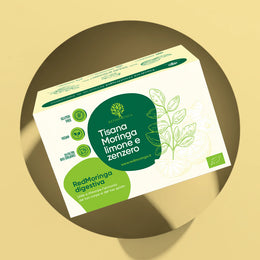
- Moringa, Ginger and Lemon Herbal Tea: for those who want to start with a cup, at €5.00.
Every batch is tested by an independent Italian laboratory (Bioleader, Turin), and we publish the results: Salmonella and Listeria not detected, E. coli below the measurable limit, gluten below the measurable limit, lactose not detected. Heavy metals and pesticides are tested even earlier, on the raw material, every time a shipment of leaves arrives. The capsules are notified to the Italian Ministry of Health. Moringa is useful for digestive function and for lipid metabolism; it is not a substitute for a varied, balanced diet and a healthy lifestyle. We advise against moringa supplements during pregnancy; if you are breastfeeding or taking medication, ask your doctor first.
Frequently asked questions about where to buy moringa
Where can you find moringa in Italy?
Mostly online, in producers' shops and on marketplaces, and then in herbalist and organic shops. In pharmacies it is rarely on the shelf, but you can order it by giving the exact product name. Plants are sold by nurseries; fresh leaves are almost only found frozen in Indian grocery stores.
Can you find moringa in the supermarket?
Rarely, and almost always as powder. If you do find it, check that it shows the botanical name, the code of the organic control body and the words "EU Agriculture" or "non-EU Agriculture": these are the first details to go missing on generic products.
Can you buy moringa in a pharmacy?
Often yes, to order, if the product is in the catalogue of the pharmacy's distributors; it is rare to see it on display. You can also buy it from online pharmacies: ours, for example, is on Redcare. Take the product name and format with you, because there are dozens of different products under the word "moringa".
Where can you buy fresh moringa leaves?
In Italy almost only frozen, in some Indian grocery stores, which also sell the pods known as "drumsticks". Alternatively you can grow a plant in a pot, which in summer gives enough leaves to cook with.
What is the best brand of moringa?
The one that, for the same price per day, gives you more leaf, with the botanical name and the part of the plant on the label, full organic details with code and place of farming, few excipients and batch testing. Work out the cost per day and per gram of leaf: it is the quickest way to compare two products.
Who should not take moringa?
We advise against moringa supplements during pregnancy. If you are breastfeeding, or taking medication, especially for blood sugar, blood pressure or the thyroid, ask your doctor first. Food supplements are intended for adults: do not exceed the dose stated on the label.
Sources
- Leone A. et al. Cultivation, Genetic, Ethnopharmacology, Phytochemistry and Pharmacology of Moringa oleifera Leaves: An Overview. Int J Mol Sci, 2015. PMID 26057747
- Regulation (EU) 2018/848 on organic production and labelling of organic products, Article 32. EUR-Lex
- Regulation (EU) 2023/915 on maximum levels for certain contaminants in food, Annex I. EUR-Lex
- Italian Legislative Decree no. 169 of 21 May 2004, implementing Directive 2002/46/EC on food supplements.
- Italian Ministry of Health Decree of 10 August 2018 on the use of plant substances and preparations in food supplements (list of permitted plants).
In short
Moringa is sold everywhere, but it is not the same everywhere: before looking at the pack price, look at how much leaf is in the daily dose, who certified it as organic and whether the batch was tested. Then work out the cost per day and per gram. If you want moringa made only of organic leaves, with a complete label and the numbers in plain sight, discover RedMoringa Organic Moringa Oleifera.