



Moringa in Breastfeeding and Postpartum: Benefits and Safety

Moringa oleifera is traditionally used in Africa, Asia and South America by breastfeeding mothers. Recent randomised clinical trials have confirmed what grandmothers in those countries knew for centuries: moringa significantly increases breast milk production. But is it really safe in breastfeeding? And in pregnancy? What are the right doses and contraindications? Let's see what science says.
In this comprehensive guide we present the most recent clinical evidence on moringa use during breastfeeding (Fungtammasan 2022, Ammar 2025, Foong 2020 Cochrane), documented benefits for mother and child, study dosages, differences between leaves/root/pods in terms of safety, and how to integrate moringa postpartum effectively and safely.
What is moringa and why is it traditionally used in breastfeeding
Moringa oleifera is a tree native to India, now cultivated in many tropical regions. Dried moringa leaves contain on average, per 100 g, 26.8 g of protein, 2,560 mg of calcium, 1,460 mg of potassium and 26 mg of iron (FAO Feedipedia, 2019); these values refer to 100 g of dried leaf, not to the daily serving of a supplement. In tropical countries fresh moringa is traditionally consumed by women after childbirth to support physical recovery, milk production and nutrition of the baby through breastfeeding.
Moringa is so nutritious that it's considered a functional food in UNICEF programs against child malnutrition in Africa and Asia.
Traditional context: moringa in different cultures
The use of moringa during breastfeeding has deep cultural roots. In the Philippines, "malunggay" (local name for moringa) is a common ingredient in soups and stews for new mothers. On the Indian subcontinent it's part of Ayurvedic tradition with specific recommendations for the postpartum phase. In East Africa (Kenya, Tanzania, Uganda) it's a pillar of UNICEF nutritional programs for malnourished mothers and children. This cultural convergence across different continents and thousand-year practice represents a form of empirical confirmation that preceded formal clinical studies. Modern science came to quantify and explain what these cultures already knew through direct observation.
Clinical evidence: does moringa increase breast milk?
Yes, with recent and solid evidence.
RCT study Fungtammasan 2022
The Fungtammasan 2022 study (PMID 36440058) is a double-blind RCT on 88 postpartum women. The group treated with moringa 900 mg/day showed:
- Milk volume increase of +47% vs placebo
- 52% of mothers reached exclusive breastfeeding at 6 months (vs 30% placebo)
- No significant adverse events in mother or newborn
Systematic review Ammar 2025
The Ammar 2025 systematic review (PMID 40724308) on 8 RCTs concluded that moringa:
- Increases breast milk volume by +400 ml/day on average
- Increases prolactin by +231.7 ng/mL
- Has favourable safety profile for mother and newborn
Cochrane 2020 and 2025 review
The Cochrane Foong 2020 review (PMID 32421208) includes moringa among evidence-based galactagogues. The more recent Cragg 2025 (PMID 41350450) on galactagogues in mothers of premature babies confirms moringa as a promising option.

The mechanism of action: why moringa works on milk production
Moringa increases milk production through several synergistic mechanisms. First, leaves contain phytohormones and compounds with mild estrogenic action that stimulate prolactin receptors. Second, the extraordinary nutrient density of leaves provides exactly the "building blocks" the mammary gland needs to produce milk efficiently: calcium for alveolar ionic environment, iron for enzymatic metabolism, amino acids for casein formation, essential fatty acids for milk lipids. Third, abundant antioxidants (polyphenols, vitamins C and E) have a protective effect on the alveolar cells producing milk, prolonging their functional lifespan. Studies in animal models have also shown that certain moringa extract fractions modulate dopaminergic activity, which indirectly regulates prolactin release.
Benefits of moringa for the breastfeeding mother
Increased milk production
The galactagogue mechanism of moringa is probably multifactorial: supply of key micronutrients for milk synthesis, phytocompounds with effect on prolactin, antioxidant effect protecting mammary alveolar cells.
Micronutrients for postpartum recovery
Postpartum is a catabolic phase. Moringa provides:
- Iron: deficit is common postpartum. 100 g of moringa leaves provide 28 mg of iron
- Calcium: extra supply for mother
- B-vitamins (B1, B2, B6, folates)
- Complete proteins with all essential amino acids
- Vitamin C: 200 mg/100 g of leaves
- Antioxidants
Beneficial secondary effects
Studies in the Philippines and Africa have documented that mothers who consume moringa in breastfeeding:
- Have better ferritin parameters (less postpartum anaemia)
- Report less fatigue and better mood tone
- Recover pre-pregnancy weight more physiologically
Safety in breastfeeding
Recent RCTs confirm moringa in leaf form is safe for mother and baby at therapeutic doses (up to 1,500 mg/day). No significant adverse events in newborns exposed through breast milk. Some reviews even report possible indirect benefits for the baby: better weight gain.
Attention: safety documented only for leaves. For roots and pods, safety evidence in breastfeeding is insufficient.
Moringa in pregnancy: safety and contraindications
Moringa in pregnancy is a more delicate subject:
- Leaves: limited safety data. Asian and African traditions use it regularly, but clinical RCT research in pregnancy is insufficient. Many sources recommend caution
- Roots and pods: contraindicated in pregnancy. Contain compounds (alkaloids like moringin) with potentially abortive or uterotonic effect documented in animal models
- Seeds: insufficient data, better avoid
Practical rule: in pregnancy limit moringa to occasional food uses and avoid concentrated supplements. Resume peacefully after delivery in breastfeeding.
Moringa dosage in breastfeeding
- Effective dose from RCTs: 900-1,500 mg/day of leaves in powder or extract
- Split: 1-2 daily intakes
- Timing: preferably during or after meals
- Duration: minimum cycles of 2-3 weeks; possible maintenance throughout breastfeeding period
When moringa isn't enough: practical tips to increase milk production
It's important to understand that moringa and galactagogues in general are an additional help, not a substitute for the foundations of successful breastfeeding. When milk production is low, the decisive factors are always: frequent demand (on-demand attachment, 8-12 times in 24 hours in the first months), correct attachment (which effectively empties the breast and sends the right stimulation signal for more production), complete breast emptying at each feed or with pump. Without these foundations, no supplement or tea will bring lasting effects. Moringa optimises an already well-functioning process or offers extra support in difficult moments (relactation, separation stress, growth spurts), but it never replaces the basic supply-demand law of breastfeeding.
Fresh moringa vs powder vs capsules: which to choose
Moringa is available in various forms:
- Fresh leaves: traditional form in countries of origin, rich in all nutrients. Difficult to find in Europe out of season
- Dried leaves in powder: convenient to add to smoothies, yogurt, soups. High nutrient concentration. Intense taste
- Capsules of leaf powder: the most practical form for constant daily intake. Standardised dose
- Standardised extract: concentrates active principles further. Lower dose (200-400 mg)
For breastfeeding, the best choice is between capsules or powder added to daily smoothie.
How to integrate moringa: Postpartum Supplement Galega + Saffron
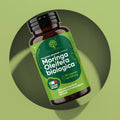
The Postpartum Supplement Galega + Saffron from RedMoringa combines moringa with other synergistic principles:
- Organic Moringa oleifera: new galactagogue with recent RCTs (+47% milk)
- Galega officinalis: traditional European galactagogue
- Saffron: mood tone support
The synergy between these 3 principles covers 3 needs in a single formula: milk production, mood, postpartum micronutrition.
Additional benefits for the baby
Benefits of maternal moringa intake in breastfeeding go beyond simply increasing milk volume. Studies have observed that milk produced by mothers taking moringa:
- Has higher content of essential amino acids and proteins
- Contains fat-soluble vitamins (A, E) in larger quantities
- Is richer in antioxidants that protect the newborn from oxidative stress
- May show slight increase in immunoglobulins and growth factors
This means milk "quality" — not just quantity — can be improved. Some studies in developing countries have documented better weight gain in babies breastfed by mothers consuming moringa.
Possible side effects
Moringa in leaf form is generally well tolerated. Reported side effects (rare and mild):
- Mild gastric discomfort or nausea
- Mild laxative effect at higher doses
- Theoretical interaction with diabetes and blood pressure drugs
- Rare allergic reactions in sensitive individuals
FAQ — Moringa in breastfeeding
Can I take moringa from day one of breastfeeding?
Yes. No contraindications to consuming moringa leaves from the first postpartum day. Starting early actually supports the onset of lactation.
Can moringa be taken together with fenugreek or milk thistle?
Yes, they can be combined. Moringa acts mainly through nutritional supply, fenugreek on different mechanisms. No documented negative interaction.
How long before I see the effect on milk?
Studies show an effect in 5-7 days of constant intake. Maximum increase reached after 2-3 weeks.
Does moringa change milk colour or taste?
In normal doses (900-1,500 mg/day) it doesn't visibly modify colour or taste. In very high doses milk can take on a slightly greenish hue and mildly herbaceous taste. Completely safe for baby.
Does it cause weight loss during breastfeeding?
Moringa doesn't cause weight loss by itself. On the contrary, it provides useful calories and proteins for postpartum recovery. Can support gradual and physiological weight loss.
Are there contraindications for the newborn?
At therapeutic doses (up to 1,500 mg/day of leaves), no documented contraindications for the breastfed newborn. Recent RCTs actually showed babies of mothers taking moringa have better weight gain.
Postpartum Supplement Galega + Saffron + Moringa
The complete formula for breastfeeding: moringa with RCT evidence +47%, traditional galega, saffron for mood. Safe, tested, organic.
Discover the product →