




Sleep aids: Which ones are the most effective?
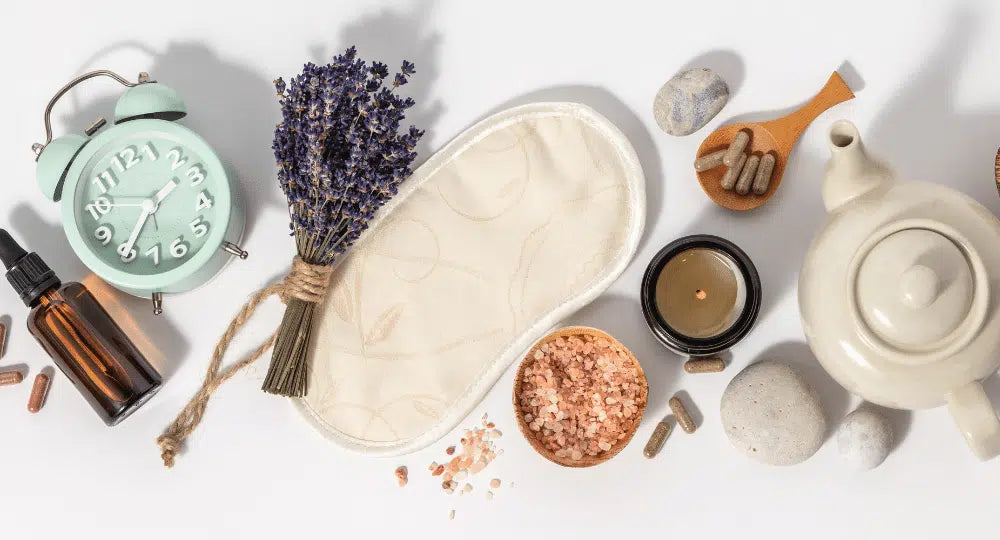
Among the herbs that can help with sleep are valerian, opium poppy, lavender, passionflower, hops, lemon balm and many others.
These are natural and alternative remedies that can also be used in combination if you find it difficult to fall asleep at the same time.
They are temporary and non-personalized solutions, so they are not always suitable for everyone.
So let's learn more about some of the main herbs used to promote sleep and their possible contraindications.
Table of contents:
- Insomnia: One in seven Italians sleeps poorly
- Herbs that help sleep: what are they?
- lavender
- Melissa
- Opium poppy
- valerian
- Catnip
- Passionflower
- valerian
- Herbs for Sleep: Watch out for drug interactions
Insomnia: One in seven Italians sleeps poorly
If one in seven Italians sleeps poorly, as claimed by the Istituto Superiore di Sanità (ISS), insomnia is the "scourge of our generation" (The Vision) with 45% of Italians suffering from temporary insomnia and 9 million suffering from suffer from chronic insomnia.
The triggering reasons for this veritable “epidemic” range from unhealthy lifestyles to stress, aging and the use of certain medications.
For example, things like going to bed irregularly, sleeping excessively during the day, eating heavy meals before bed, lack of physical activity, and using electronic devices in bed can cause states of insomnia.
Some natural remedies, such as specific herbs, can help with relaxation and sleep if you have difficulty falling asleep.
In more severe cases associated with insomnia and accompanied by depression, anxiety and stress or other medical conditions (such as sleep apnea, headaches, hyperthyroidism, food intolerances, etc.), it is advisable to consult your own family doctor.
Herbs that help with sleep: which ones are there?
Insomnia is the inability to sleep at the scheduled time.
Sleep medicines and cold medicines that cause drowsiness may provide temporary relief, but may not be suitable for everyone and may have side effects.
One can choose herbs to support sleep that often contain active ingredients that are also found in some medications, although each type of remedy has its own contraindications that should be evaluated on a case-by-case basis.
lavender
Lavender (Lavandula officinalis) is a herbaceous plant and evergreen shrub that belongs to the mint family (Lamiaceae), the same family as mint.
It is native to the Mediterranean region and includes around 25 different species.
The scent of lavender is quite pleasant, and various studies have shown that lavender oil in aromatherapy can reduce agitation, even in those with dementia.
Furthermore, an observational study showed that lavender helped people with insomnia, noting a difference between the use of lavender oil and almond oil.
The calming and relaxing effects of lavender have been known for a long time.
The name "Lavandula" comes from the Latin word "lavare", which means "to wash", since lavender was used to cleanse and perfume the body in ancient times.
In addition to its calming and relaxing effects, the beneficial effects of lavender also include the relief of headaches and insomnia, thanks to its properties acting on the neurotransmission of serotonin (the "happiness hormone") in the central nervous system.
In folk medicine, it is often recommended to have a lavender plant in the bedroom to help sleep better.
Melissa
Lemon balm (Melissa officinalis) is a small-sized perennial herb with a lemon scent.
It comes from southern Europe and Asia and belongs to the mint family (Lamiaceae).
Its main functions are sedative and antispasmodic, making it suitable for treating anxiety, depression and sleep disorders.
The plant often grows wild in gardens, and its calming and sleep-inducing properties have long been known in folk medicine.
However, there is insufficient evidence for the effectiveness of lemon balm alone against insomnia; it appears to work better in combination with valerian.
The calming effects of lemon balm occur at low doses and it appears to be a safe remedy. However, when taken with sedatives, it may cause excessive sedation.
It is also not recommended to take lemon balm in people with hypothyroidism, as it may partially inhibit thyroid activity. It should also be avoided during pregnancy, while breastfeeding and in people at increased risk of glaucoma.
Escolzia
The Escholzia or California poppy (Eschscholzia californica) is a herbaceous plant from the poppy family (Papaveraceae) with orange flowers. It is native to Mexico and California.
Escholzia contains alkaloids that act on the central nervous system and have calming and sleep-promoting properties. It is often used to induce sleepiness, particularly in cases of anxiety and depression. In homeopathy it is often used in therapies to promote sleep, including in children aged six and over.
The use of Escholzia is not recommended when taking barbiturates, antidepressants, during pregnancy and breastfeeding.
valerian
Valeriana (Valeriana officinalis, family Valerianaceae) has been used for centuries for its calming and sleep-inducing properties.
It has been included in the "Official Pharmacopoeia of the Italian Republic and Herbal Drugs", along with lavender, lemon balm, chamomile and hops.
Common in Europe and Asia, it has sedative properties and is used as a mild sleeping pill for insomnia.
Its extract is obtained from dried roots and is used to promote relaxation and sleep induction.
Its main effects include improving sleep quality and, as various studies have shown, it works best in small doses and in combination with other herbs such as lemon balm or melatonin, which is a natural hormone in some foods and supplements.
The acids contained in Valeriana can inhibit the activity of GABA (gamma-aminobutyric acid), a chemical transmitter that affects neuronal excitability.
Possible side effects include headache, insomnia, bradycardia (slowing of heart rate), decrease in blood pressure, irritability, and use is not recommended during pregnancy, breastfeeding and in combination with barbiturates.
Catnip
The "Erba gatta" or "Nepeta cataria" is a perennial herbaceous plant, also known as catnip. Like lemon balm and lavender, it belongs to the mint family (Lamiaceae).
Its name derives from the fact that it is highly prized by cats, but not all "cat herbs" sold in pet stores are Nepeta cataria. These are often herbs that aid the cat's digestion, while only Nepeta Cataria has specific effects.
The volatile component nepetalactone contained in it affects the opioid system of various cat species. Similar herbs from Japan and China such as matatabi and silver wine produce similar effects.
The benefits observed in humans are mainly sedative, although they are not recognized by modern medicine. They can cause drowsiness, but it is strongly recommended to use them in small amounts.
In fact, consuming it in high doses can be dangerous. For example, it can cause uterine contractions during pregnancy.
hop
The "Luppolo" (Humulus lupulus) is a plant from the hemp family (Cannabaceae) that is used not only to flavor beer, but also to combat anxiety and insomnia.
In fact, it is a perennial plant with sedative effects, therefore its use in conjunction with antidepressants and sedatives is not recommended.
In particular, the flowers are used to treat mild insomnia, hence the saying: "Sleeping on pillows filled with hop flowers promotes sleep."
In general, similar to Valeriana, hops are also taken in combination with other herbs in small doses to ensure safety. The effects of high doses are not known, but there are reports of skin rashes when handling the plant.
Additionally, due to its estrogen-like properties, hops should be avoided by women who have breast cancer or are at increased risk of breast cancer.
Kava
"Kava" or "Kava Kava" (della family delle Piperaceae) is the name of the radici and the rhizoma of a pianta diffusa nel Pacifico Meridionale (Piper methysticum).
Significant scientific evidence has highlighted its properties as an anxiolytic and sleep inducer.
The dose depends on the amount of active principles, the kavalactones, which in standardized use should not exceed 30%.
The use of Kava together with other anxiolytics, barbiturates and benzodiazepines is strongly discouraged, as is its use in cases of Parkinson's disease.
In addition, some studies have found neurological alterations and states of hepatotoxicity, mostly linked to preparation methods. Caution in the use of Kava and prior consultation with a health professional are advised, above all in view of the side effects and possible interactions with other medicines.
Passiflora
"Passiflora" or "Passiflora incarnata" (Fam. Passifloraceae) is a North American climbing plant that has long been used as a mild sedative.
As various studies on mice have shown, it has calming effects and promotes long sleep.
In humans, it has helped reduce anxiety and nervousness, although there is insufficient evidence of its effectiveness in treating insomnia.
Their use appears to be safe, but should be avoided when taking other medications such as sedatives, during pregnancy and when breastfeeding.
Scutellaria
"Scutellaria," in the same plant family as mint (Lamiaceae), is an herbaceous plant with purple flowers, similar to lavender flowers.
It is used in phytotherapy because of its natural calming and sleep-inducing effects. It also has an anti-inflammatory effect, comparable to non-steroidal anti-inflammatory drugs (NSAIDs), but without stomach side effects.
The main active components are mainly found in the roots.
There is currently no scientific evidence supporting the effectiveness and dosage recommendations of this plant. There is also debate about its potential liver toxicity.
It is not recommended during pregnancy, breastfeeding or when taking other sedatives.
Sleeping aids, be careful with drug interactions
In general, it is important to note that, as also recommended by the American Academy of Sleep Medicine, caution should be exercised when taking dietary supplements, even if they are natural and of good quality, to avoid possible interactions with medications (such as sedatives, Barbiturates, antidepressants, etc.) should be avoided. For this reason, it is always advisable to discuss this with your doctor first.
Especially if insomnia is severe, there may be other health problems that need to be diagnosed and treated first.
Resources:
- American Academy of Sleep Medicine
- https://www.winchesterhospital.org/health-library/article?id=21249
- Biological and pharmaceutical properties of essential oils of Rosmarinus officinalis L. and Lavandula officinalis L
- https://www.sciencedirect.com/science/article/pii/S2214785321025803
insomnia
- https://www.sciencedirect.com/science/article/abs/pii/S0002934306002750
Melissa officinalis
Let's find out how to grow lavender in a pot or in the ground
- https://oggiscienza.it/2021/07/09/erba-gatta-a-cosa-serve/index.html
- https://koreascience.kr/article/JAKO201123163433661.page
- https://www.ncbi.nlm.nih.gov/pmc/articles/PMC5611612/